
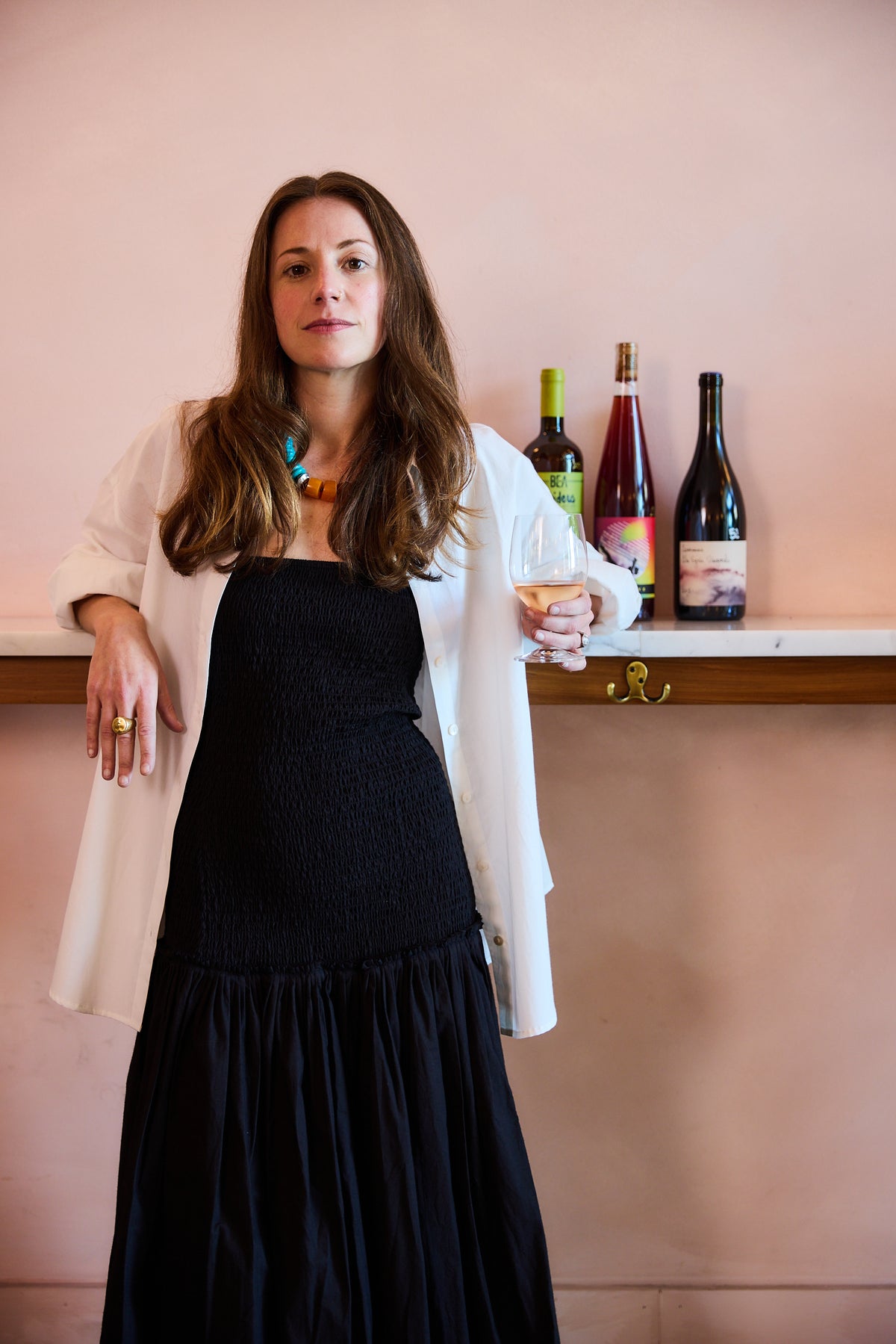
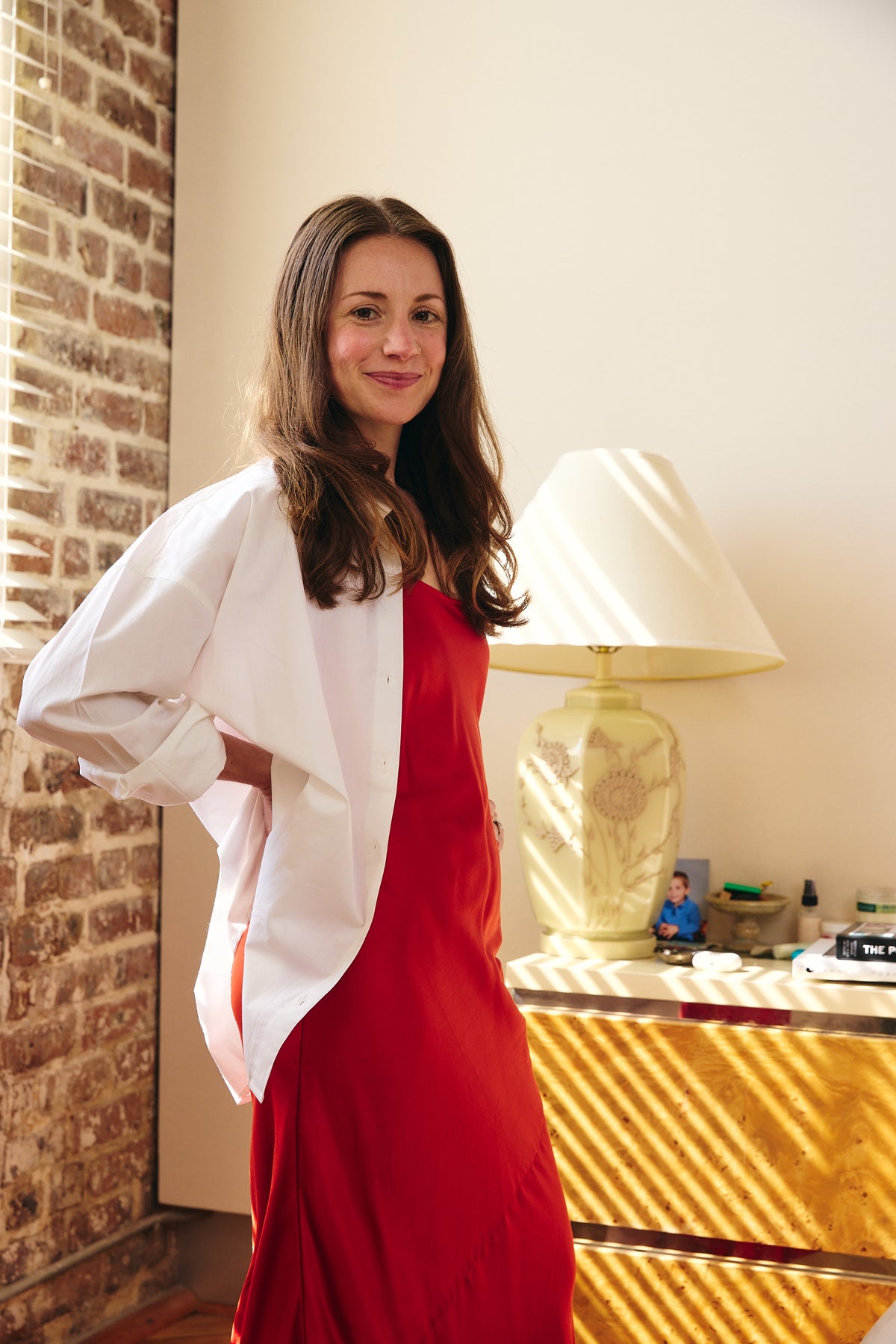
Our latest edition of Living in Lekha features our friend Leslie Pariseau, a true multihyphenate. Leslie is a writer, editor, and occasional producer, in addition to owning two of our favorite local spots: St. Pizza and Patron Saint.

You’re a Midwesterner who has found a home and community in New Orleans. What drew you to the city and why did you decide to grow roots here?
The idea of home, before New Orleans, was always a bit opaque for me. From the time I was conscious of where I was from, I wanted to leave. And, it’s funny, New Orleans was one of the first places I ever felt truly at home after leaving Ohio. I went to school in Ann Arbor, spent my last year in Paris, moved straight to Miami, and, in the disorientation of culture shock, came to New Orleans for a week in 2007 at the tender age of 21. I wandered around in the swampy July humidity with a film camera and a paper map attempting street names with a French accent and getting chided by cab drivers. It was wonderful. New Orleans got inside of me in a way no place else ever has. In between that first trip and moving here, I lived in New York for 12 years becoming a journalist, co-founding a magazine, editing for magazines, getting an MFA, rueing the MTA, always thinking about how to get back to New Orleans.

Your background is in writing and editorial. How did you decide to branch out into owning a business in hospitality?
Writing—and actually earning a living doing it— is to learn how to run a small business. If you’re writing in New York City and don’t have a financial cushion, you’re hustling to pay the bills. In high school and college, I worked in hospitality to pay tuition, and when I moved to New York I got a job with the Momofuku group at Ssäm Bar back when the national dining scene was experiencing a massive shift in style. At the time, we were the city’s only three-star restaurant with paper napkins and throw-away chopsticks that didn’t take reservations. It was an education in producing a show every night, welcoming in millions of hungry New Yorkers, and paying rent in cash while doing a free internship at the food magazine Saveur. More than anything, I wanted to make it as a writer, and, at the time, you could do that working in restaurants at night and editorial during the day. I’ve built a near 20-year career doing every kind of writing imaginable—ghostwriting books, copywriting for fragrance and spirits brands, cover stories for travel magazines, television treatments—and, in many ways, writing is a service. And all service is about fulfilling desire. At the end of the day, hospitality is about fulfilling desire.

What drew you to the Lekha pieces you’re wearing?
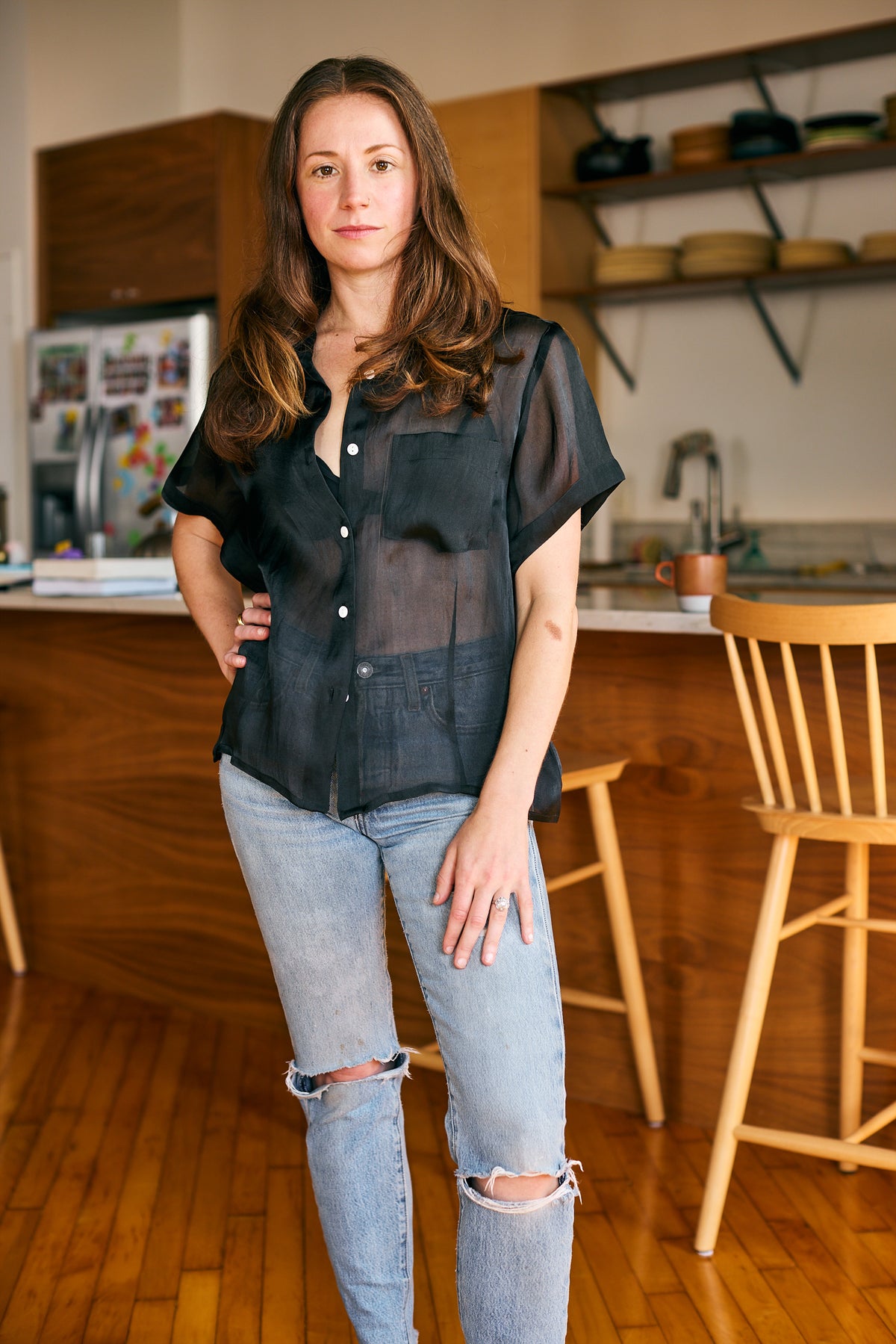
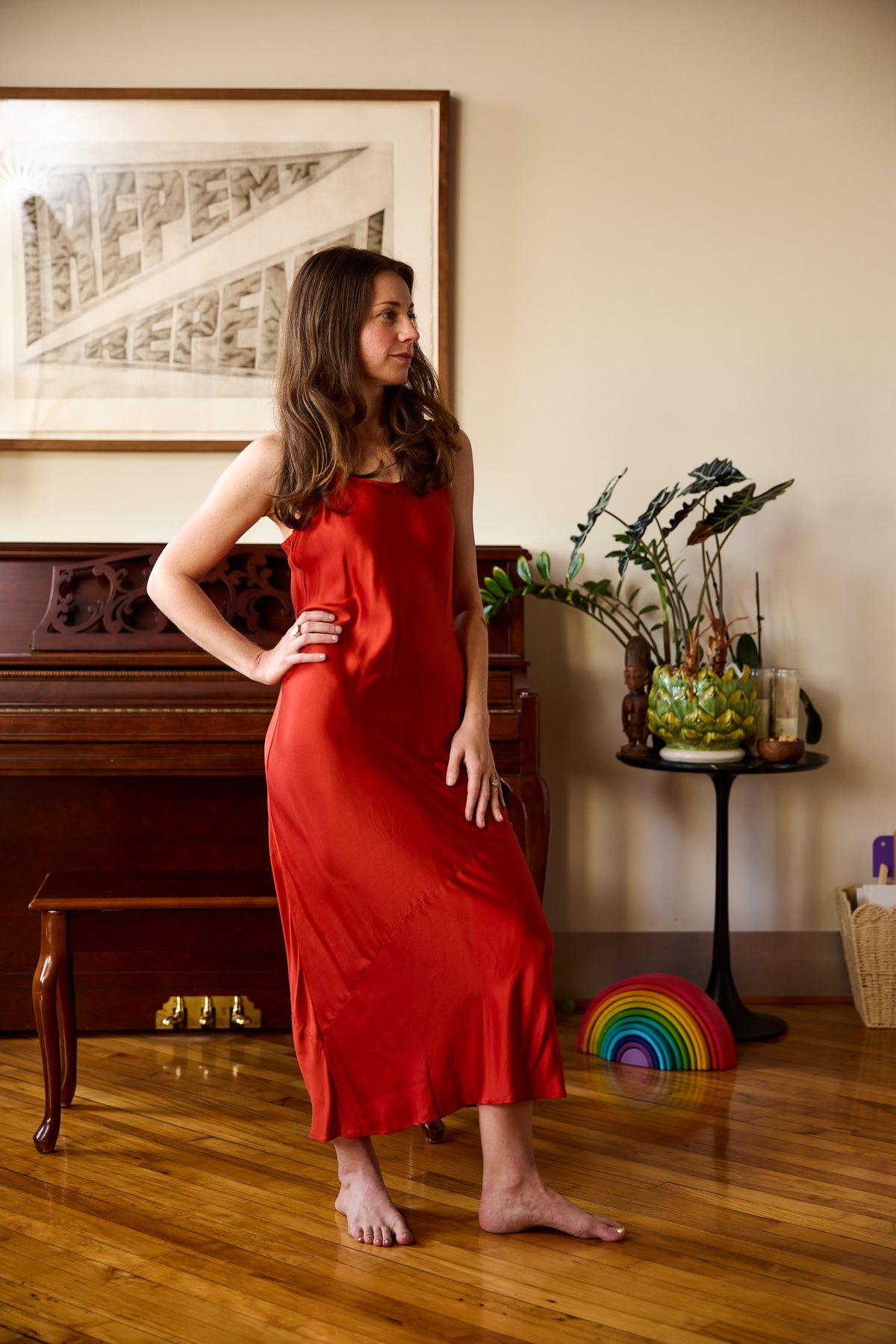
I’m in a phase of life where I’m seeking a balance between clarity and dreams. In clothing, this manifests in grounded pieces—jeans, linen, button downs, leather—mixed with what I think of as a soft edge, which feels so beautifully embodied by Lekha’s organza. Rough silken texture, sheer to show some skin, softly structured. The slip dress has this same feeling for me; it’s a sensual, soft shape, but in a color that has depth and texture. I go nowhere without my brown Lekha suede jacket.

How would you describe your personal style? What do you wear on a typical day vs. a special occasion?
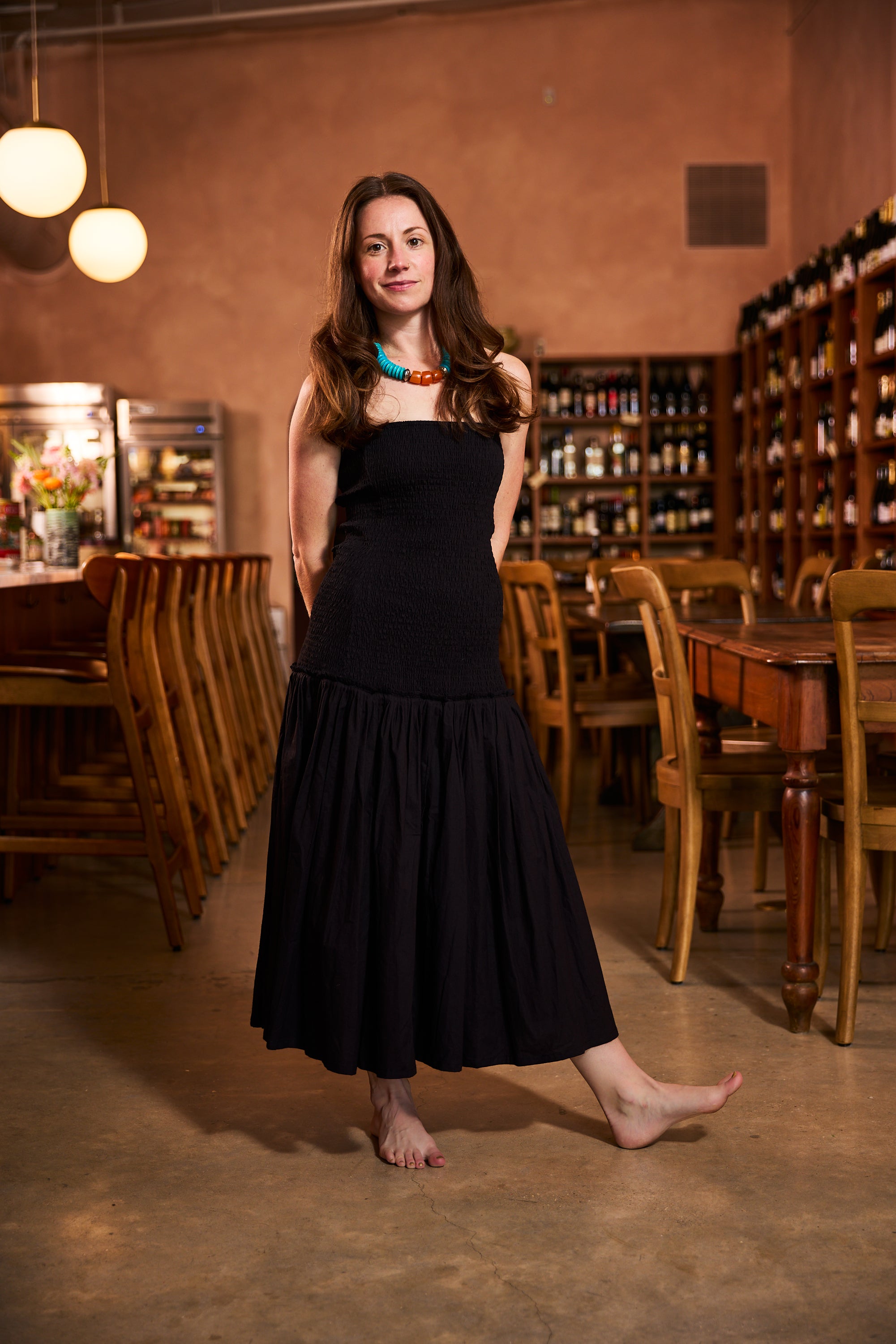
Classic-former-New-Yorker-earth-mother. I almost always wear jeans and am always hunting for perfect, worn-in denim. I am drawn to black and terracotta/sienna, which is sated by so many Lekha pieces including my very favorite brown suede jacket. I like to mix soft and crisp textures, along with a balance of coverage and reveal. On a typical day, I’m in denim, a button-down in cooler weather, and a structured black tank in warmer weather. I almost always wear a chunky necklace (Susannah Lipsey’s Freda has amazing pieces) and a pair of leather sandals from No. 6 or Mari Giudicelli. On special occasions, I’ve got a dozen black dresses in lots of different textures—linen for summer and silk for winter—plus a new cache of Lekha slip dresses. I wear a lot of early No. 6 heels in great textures, red suede, snakeskin, and brocade.

What do you think makes a party or gathering a success? Any easy tips for people hosting at home?
As we do at the wine shop and the restaurant, we think a lot about music and lighting. Tony has dozens of dinner party playlists, and we always have candles on the table so everyone looks and feels good. Before guests arrive, I like to have the bulk of the work done so I don’t feel or appear harried and can be present for conversation; Tony is better at working in the kitchen and entertaining simultaneously. The first moments of a dinner party should feel celebratory, so there’s always a sparkling wine open, some caviar or tinned fish, and a spread of easy little things—olives, chips, salty nuts, cheese.
I’m not sure if this is a good host tactic, but when the night is winding down, if it seems like people are ready to go, I’ll say I’m headed off to bed, and if people still seem like they’re having a great time and Tony’s up for hosting solo, I have no qualms about slipping out and letting everyone else close the night down while I head off to dreamland.
Lastly, a rapid fire round:
Favorite recent discovery?
Tulane baseball games—popcorn, big beers, peanuts, sunshine.
Something you think is underrated?
Soft strength. Being strong doesn’t have to be loud or big or controversial. It can be steady and pretty and subtle.
Dream dinner guest?
My daughter at all of her ages. I love sitting with her now, at almost three, reading books and talking about our days, and I’m equally as excited to sit with her at six and 15 and 20 and 30 to hear everything that’s going on in her wild little brain.
In the mountains or on the water?
Water please. Let’s float away together.

